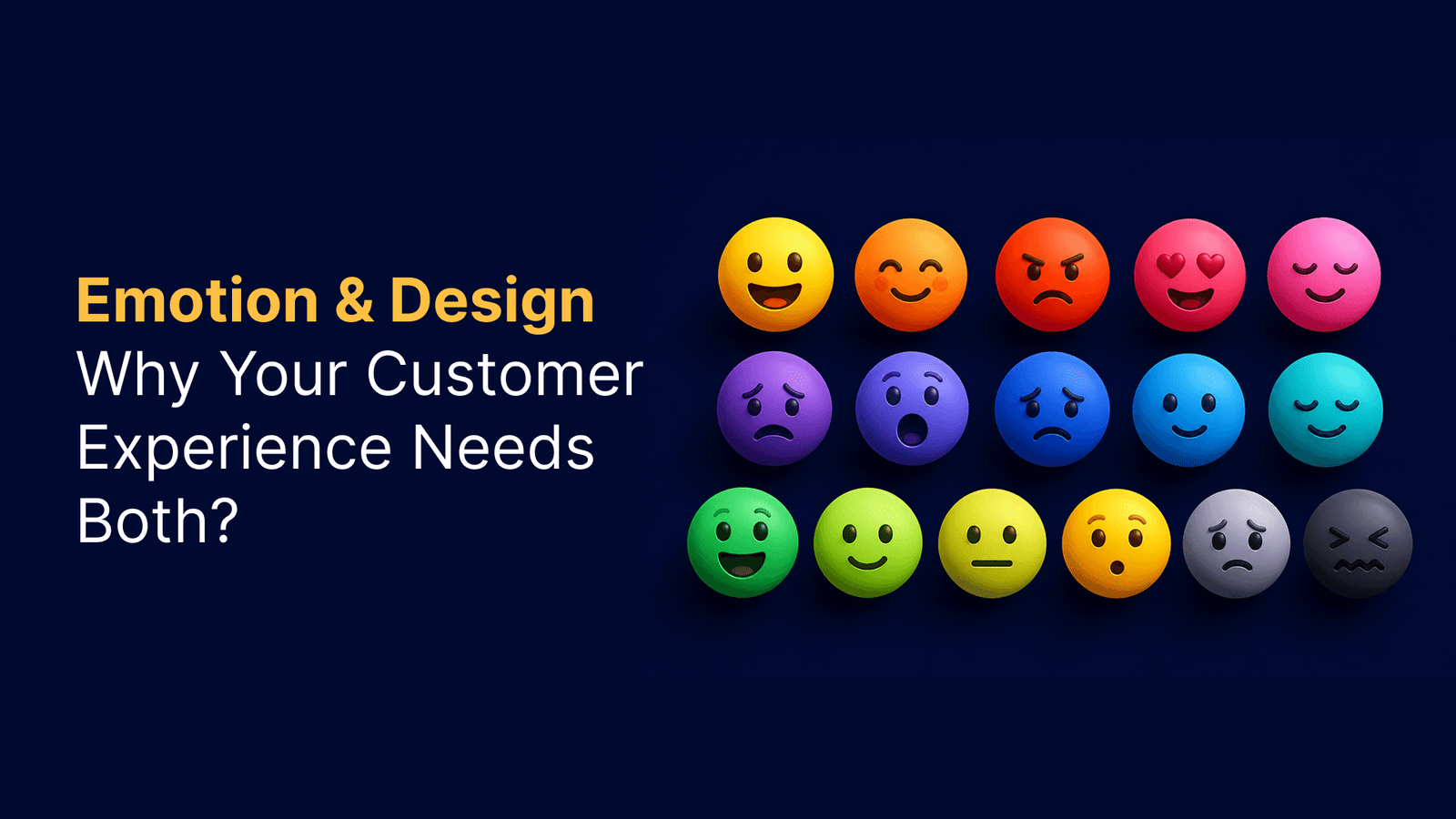


Trust forms in less than 250 milliseconds. This startling reality underscores why design for trust has become fundamental to creating effective digital experiences. In fact, trust has emerged as the most valuable currency a brand can hold in today’s digital landscape.
When users encounter our products, their first impression is rarely verbal it’s visual. This phenomenon explains why companies like Airbnb design for trust deliberately, helping users overcome inhibitions about letting strangers into their homes. Similarly, thoughtful logo design for trust can instantly communicate reliability before a single word is read. However, trust isn’t built on esthetics alone it’s a cumulative outcome of consistent, reliable experiences throughout the user journey.
In this article, we’ll explore how to create trust through intentional design choices, turning it into a pragmatic, tangible, and actionable asset for your digital products. We’ll examine the visual language that builds credibility, the importance of consistency, and the methodologies that ensure your design empowers rather than alienates your users.
The first impression: how users perceive trust visually?
“You cannot understand good design if you do not understand people.”
Dieter Rams, Legendary Industrial Designer, former Head of Design at Braun
Users form visual impressions about your digital product in just [50 milliseconds](https://activewebsitemanagement.com/blog/impact-of-website-design/). This lightning-fast judgment occurs long before they read a single word of your carefully crafted content. Visual design immediately communicates professionalism, competence, and ultimately, trustworthiness – establishing what psychologists call the “halo effect”.
Why visual design matters more than words?
Visual design serves as the silent ambassador of your brand, creating immediate perceptions that significantly influence user confidence. Research confirms that professional and visually appealing design elements directly increase trust from users. This happens because our brains form rapid judgments based on visual cues, which then color our entire perception of a product or service.
Furthermore, the impact of visual design on trust has measurable business outcomes. Studies show that reliability is the most significant predictor of customer e-trust in online shopping, followed by perceived ease of use and website design. A meticulously designed website visually communicates professionalism, attention to detail, and dedication to quality – all essential trust foundations.
The role of color, layout, and spacing
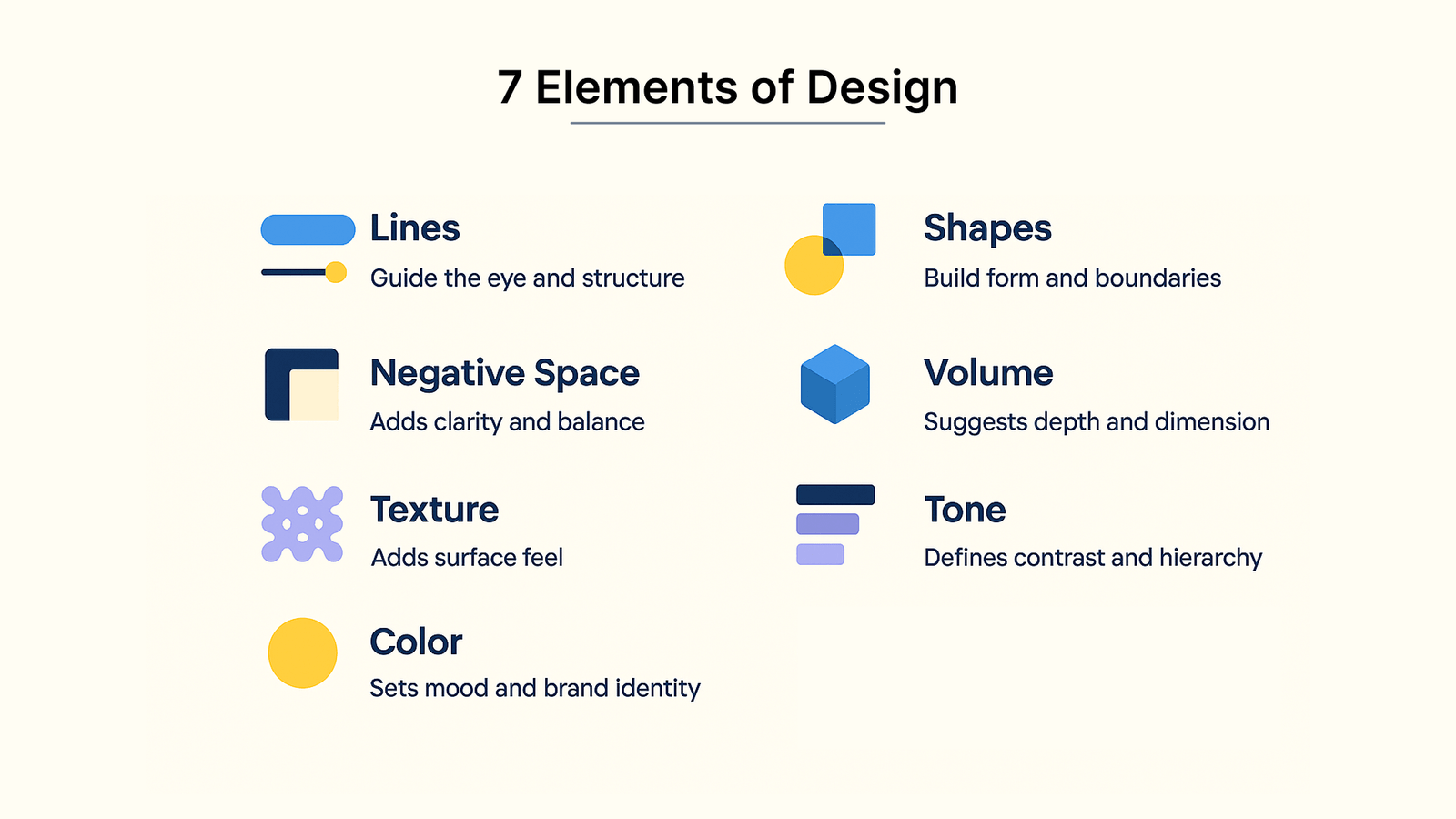
Color choices profoundly impact trust perception, with different hues evoking specific emotional responses. Blue, notably, is associated with trust and reliability, making it a popular choice for financial institutions and tech companies seeking to establish credibility. Meanwhile, red can create urgency and attention – surprisingly outperforming green by 21% in conversion tests despite green’s positive “go” associations.
Layout and spacing play equally important roles in building visual trust. Negative space (also called white space) is not merely empty area – it defines boundaries and brings balance to a composition. Proper spacing between elements allows users to focus on essential content while avoiding visual clutter. Consequently, a clean, well-structured interface demonstrates professionalism and signals that a company is committed to staying relevant.
For maximum effectiveness, designers often apply the “60/30/10” rule – using a baseline color for 60% of the design, a secondary color for 30%, and an accent color for just 10%. This creates visual hierarchy while maintaining harmony, essentially guiding users through the interface while building confidence in the design.
How logo design for trust influences perception?
A logo often represents the first interaction people have with an organization, making it a crucial element in establishing trust. Research indicates that 95% of brands use no more than two colors in their logos, with blue (conveying stability and trust) and red (energy and action) being the most common choices.
Primarily, a strong logo for trust must balance several key elements:
- Simplicity – 82% of Fortune 500 companies use just one or two colors in their logos, creating designs that are instantly recognizable and memorable
- Originality – An original design stands out and leaves a lasting impression
- Functionality – Logos must remain legible and impactful at any size
The most effective logos tell the story of your brand through thoughtful design elements, strengthening the emotional connection with users. Above all, every design decision must align with the brand’s purpose and personality. This creates a cohesive visual identity that builds trust through consistent representation across all touchpoints.
Consistency builds credibility
Consistency across digital interfaces forms the bedrock of user trust. When design elements behave predictably, users develop confidence in your product, allowing them to focus on tasks instead of deciphering how things work. Indeed, consistency in design significantly enhances familiarity and reduces cognitive load, directly contributing to an increased sense of trust.
Why design systems matter?
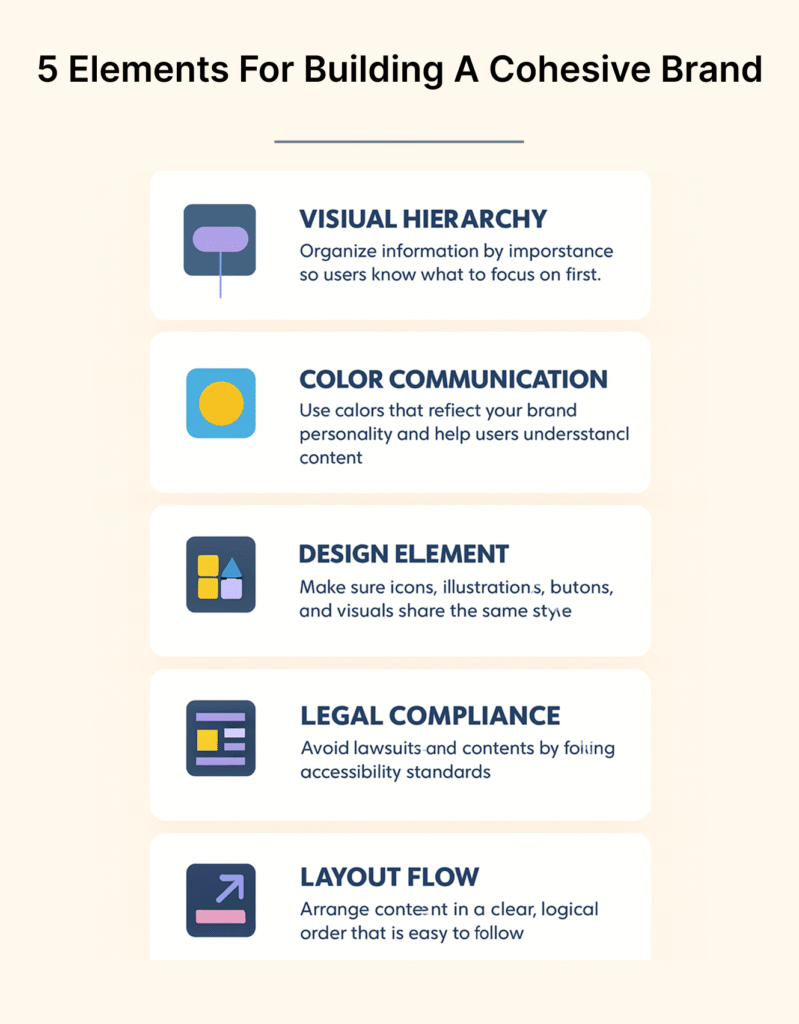
Design systems serve as the single source of truth that enables teams to create consistent experiences at scale. Through token systems and partnership with brand teams, design systems bring a company’s brand to life faster and in richer ways. They allow designers to make important decisions once and canonize them, preventing the same decisions from being repeated with differing results.
For larger organizations, design systems provide these critical benefits:
- Enhanced usability – users can predict element behavior, creating smoother experiences
- Accelerated learning – familiarity with one section transfers to others
- Improved esthetics – cohesive appearance enhances visual appeal
- Reduced errors – predictable interactions minimize user mistakes
- Stronger brand recognition – consistent visual elements reinforce identity
When decisions aren’t formalized in a design system, the resulting experiences feel like they came from different teams with different objectives subsequently degrading user trust.
Avoiding visual and functional contradictions
Visual contradictions create cognitive friction that undermines trust. Imagine using an app where navigation constantly changes location, buttons have inconsistent styles, or color schemes shift unexpectedly such inconsistencies inevitably lead to confusion and frustration.
To avoid functional contradictions, focus on these aspects:
- Action consistency – When users understand functionality in one section, they should understand it everywhere
- Terminology uniformity – Using two different words for the same function makes them seem like different functions, causing workflow interruptions
- Visual language alignment – Elements with similar functions should look and behave similarly
Periodic consistency reviews are essential, primarily to identify and correct discrepancies across your product. Nielsen’s heuristics recommend conducting regular design reviews involving representatives from multiple design teams. Additionally, larger organizations benefit from targeted consistency reviews by senior UX staff with cross-product knowledge.
Examples from Airbnb design for trust
Airbnb’s success stems largely from addressing a fundamental challenge: overcoming the “stranger-danger bias”. The platform had to build trust between people who had never met a formidable design challenge.
Initially, Airbnb founders discovered that hosts with poor-quality photos struggled to attract guests. Rather than relying solely on software solutions, they personally visited properties and photographed rooms themselves. This hands-on approach demonstrated that authentic hospitality requires both technological and human elements.
Throughout their platform, Airbnb maintains consistent design across their website and app, making navigation intuitive and interactions predictable. This consistency reinforces trust and credibility by creating familiar patterns users can rely on.
Their reputation system provides another cornerstone of trust. Research conducted at Stanford found that high reputation scores effectively overcome deeply rooted biases. Accordingly, Airbnb designed intuitive forms that build connections and increase host acceptance rates by suggesting appropriate message length and content.
By focusing on consistency in every aspect from visual design to interaction patterns: Airbnb demonstrates how thoughtful design for trust transforms seemingly impossible concepts (letting strangers into your home) into everyday experiences millions now embrace confidently.
Designing for subconscious trust
“If we want users to like our software, we should design it to behave like a likable person: respectful, generous and helpful.”
Joshua Porter, Co-founder of Rocket Insights, UX thought leader
Research shows that [up to 95% of our daily decisions](https://gofishdigital.com/blog/ux-design-for-the-subconscious-how-to-craft-experiences-that-boost-conversions/) happen beneath the surface, influenced by subtle cues we’re not even aware of. This phenomenon explains why designing for subconscious trust has become a powerful strategy for creating compelling digital experiences.
Understanding the preconscious mind
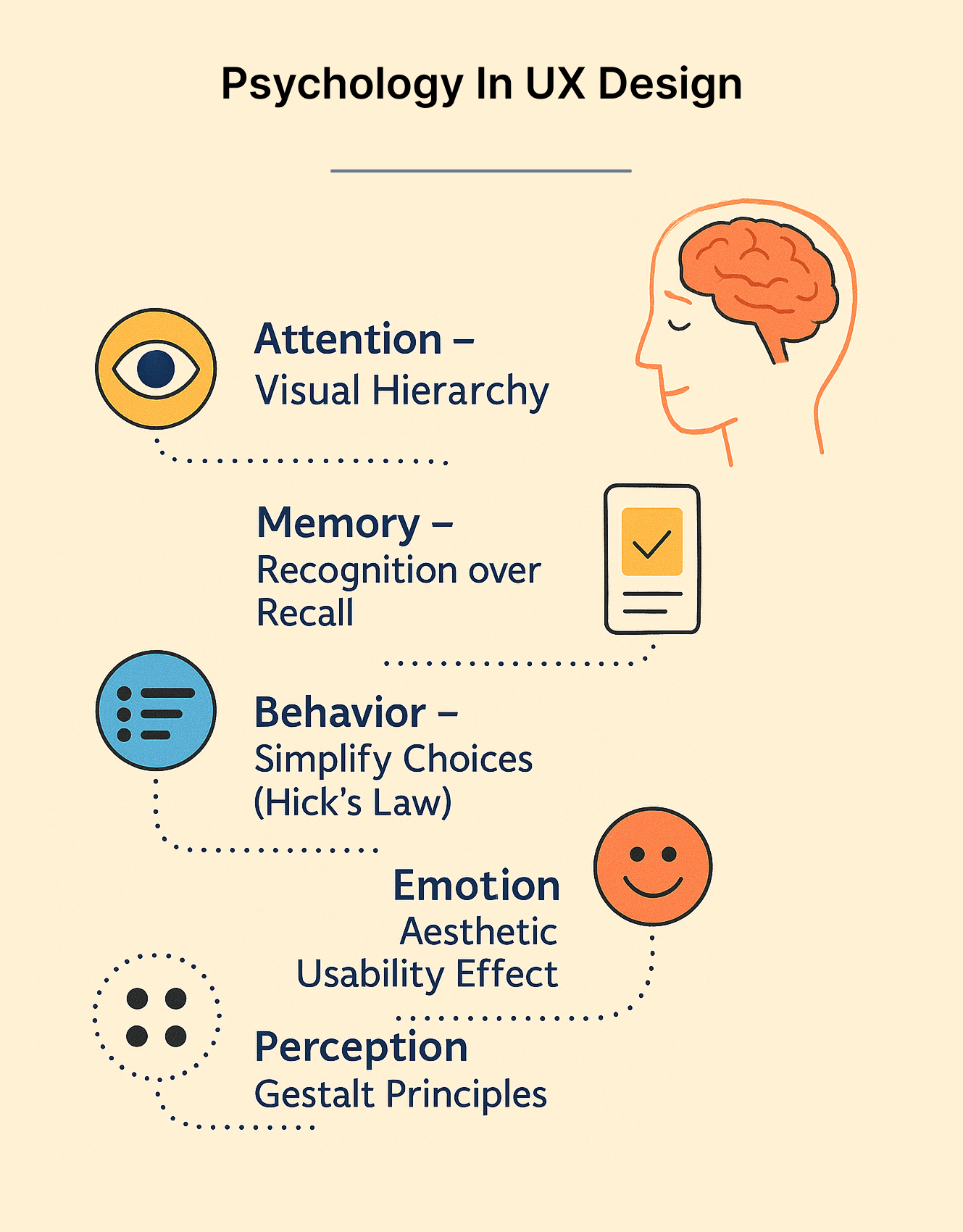
The preconscious mind operates as a bridge between conscious and unconscious thoughts, containing information not currently in focus but easily retrievable when needed. Unlike the complex unconscious, preconscious thoughts can be accessed with appropriate triggers. Primarily, this mental layer filters sensory information, highlighting what seems relevant based on past experiences and expectations.
For designers, this presents a unique opportunity. By understanding how the preconscious mind works, we can create interfaces that establish trust before users consciously evaluate our products. The preconscious influences critical aspects of user experience, including perception, decision-making, and problem-solving. Generally, when we tap into preconscious processing, we bypass the skepticism that often accompanies conscious evaluation.
Microinteractions and emotional cues
Microinteractions those tiny, focused moments within interfaces silently build trust through consistent feedback. These subtle design elements guide users, transform routine tasks into enjoyable moments, and create intuitive experiences. Fundamentally, they work through four key components:
- Triggers: Actions that initiate the microinteraction
- Rules: Predefined conditions governing responses
- Feedback: Visual or auditory confirmation of user actions
- Loops and modes: Patterns determining repetition and engagement
Specifically, microinteractions enhance trust by providing immediate confirmation that the system is working as expected. When a button changes color upon hovering or a subtle animation confirms a completed action, users gain confidence that the interface is responsive and reliable. Moreover, these small details infuse emotional value into the experience, fostering deeper connections between users and products.
Typography and visual rhythm
Typography profoundly shapes trust perception beyond mere esthetics. Font choices directly communicate personality and reliability serif fonts typically convey tradition and formality, whereas sans-serif options feel modern and approachable. Size, spacing, and layout dramatically impact readability, with comfortable reading experiences fostering positive emotions while difficult reading creates frustration.
Typography ultimately becomes the “connective tissue” between content and users, ensuring information remains accessible and engaging. When designed thoughtfully, typography establishes visual rhythm through consistent patterns that create both familiarity and predictability two essential components of trust.
By designing for the subconscious mind through these elements, we create experiences that resonate on a deeper level, building trust that transcends conscious evaluation and creating stronger, more intuitive connections with users.
Principles that shape trustworthy UX
Building trustworthy UX requires adherence to core principles that guide every design decision. These foundational elements work together to create digital experiences where users feel confident, valued, and secure.
Transparency and clarity
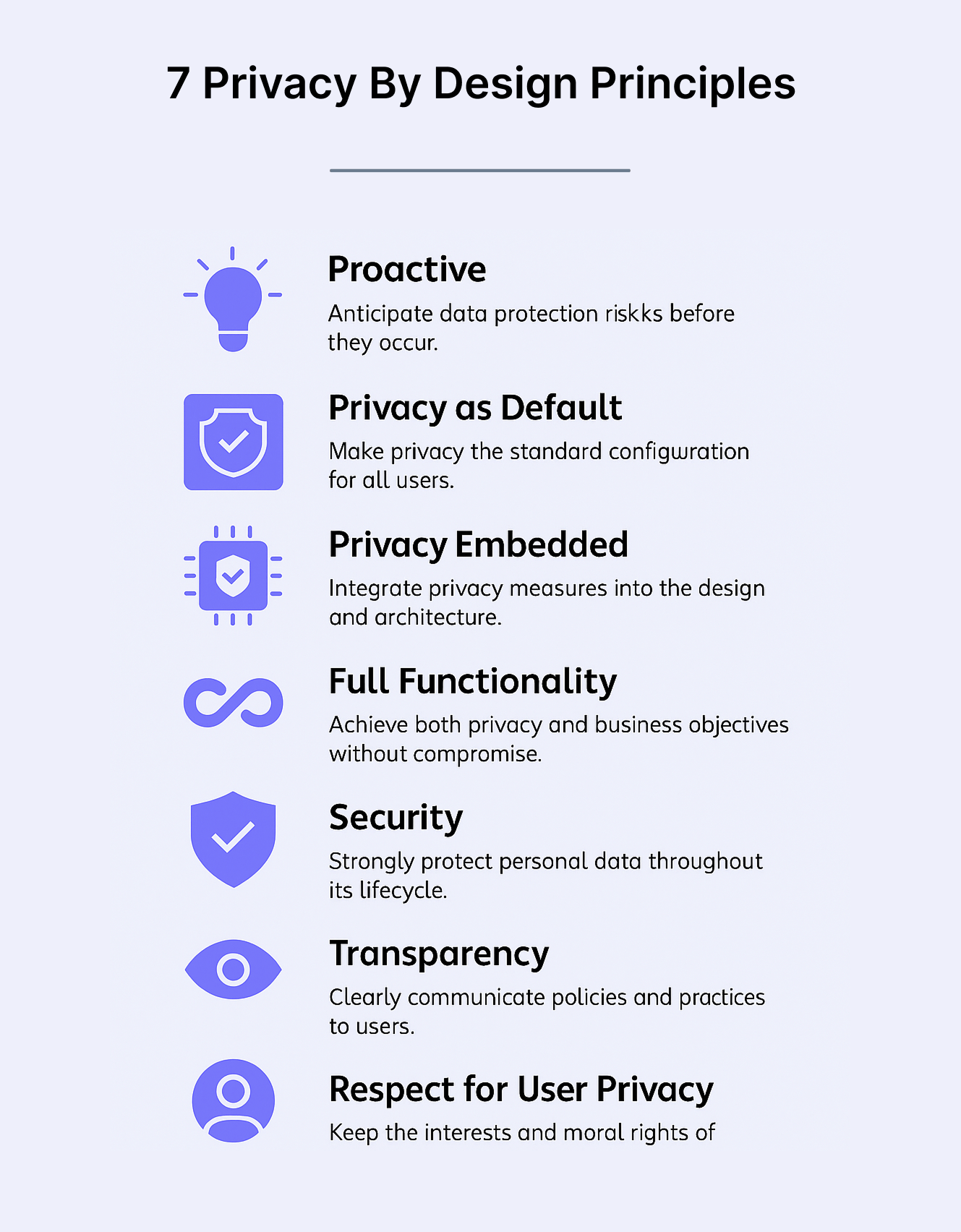
Trust fundamentally begins with transparency. Users are more likely to engage with platforms that demonstrate honesty and straightforward practices. Clear communication about policies, data usage, and functionality creates an environment where users can make informed decisions. Primarily, this means avoiding dark patterns deceptive design tricks meant to manipulate users into unintended actions. Instead, present information in accessible layers, allowing users to grasp essential details quickly while offering deeper insights for those who seek them.
Security and privacy by design
Effective security measures must be embedded from the start not added as afterthoughts. This “privacy by design” approach ensures protection throughout the entire user journey. As concerns about data privacy intensify, users need visible reassurance through:
- SSL encryption and security badges
- Transparent data handling practices
- Clear, jargon-free privacy policies
- Simple opt-out mechanisms
User empowerment through control
Empowerment comes through providing users with meaningful control over their experience. This includes clearly labeled exit points or “emergency exits” that enable users to abort processes without going through convoluted steps. Furthermore, implementing straightforward methods for data access, correction, and deletion gives users confidence in managing their information. When users feel they can navigate interfaces autonomously, their trust in the system naturally grows.
Reliability and performance
Technical performance directly impacts perceived trustworthiness. Slow-loading websites create frustration and doubt about reliability, often causing users to abandon the experience entirely. Beyond speed, functionality must be thoroughly tested all interactive elements should work as expected, with no broken links or unresponsive features. Quality assurance checks for both functionality and content accuracy represent essential final steps before product launch.
Measuring and improving trust over time
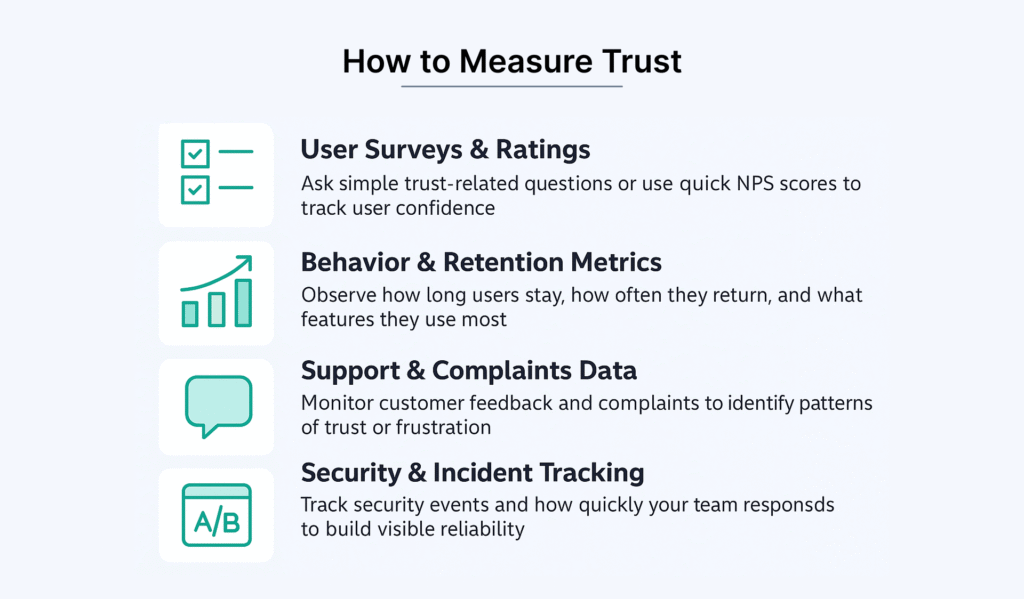
Effective trust design requires ongoing measurement and refinement. Organizations that underestimate how systems handle failure lose money making failure points one of the biggest gaps in improving user trust.
Using data to identify trust gaps
Tracking user behavior reveals critical trust barriers. By analyzing both quantitative and qualitative data, designers can pinpoint exactly where trust breaks down:
- Analytics data – Reveals behavioral patterns like form abandonment rates and search failures
- Error message tracking – Identifies usability flaws by revealing which messages users encounter most frequently
- User feedback – Provides context for why users struggle or drop off
Mapping the user journey for trust signals
Journey mapping transforms abstract trust concepts into actionable insights. Primarily, effective maps combine real user behavior with emotional responses at each touchpoint. Without deep understanding of user behaviors, preferences, and pain points, you simply cannot map a meaningful trust journey.
Design for trustworthy software methodology
The Design for Trustworthy Software (DFTS) methodology shifts quality focus upstream preventing bugs rather than finding them after implementation. This customer-oriented approach demands that major quality deployments happen before writing a single line of code.
Ultimately, good systems can personalize error responses dynamically based on user context:
- Providing step-by-step instructions for novices
- Offering quick fixes for experienced users
- Simplifying recovery paths for users showing stress signals
Conclusion
Trust remains the cornerstone of effective digital experiences. Throughout this article, we’ve seen how visual elements communicate reliability in milliseconds, long before users consciously evaluate our products. Consequently, thoughtful design decisions from color schemes to typography significantly impact whether users perceive our products as trustworthy or questionable.
Additionally, consistency proves essential for building lasting credibility. When interfaces behave predictably across touchpoints, users develop confidence in our products and focus on completing tasks rather than figuring out how things work. Airbnb’s success clearly demonstrates this principle, showing how design for trust can transform seemingly risky behaviors into comfortable experiences.
Beyond conscious perception, subconscious design elements also play a crucial role. Microinteractions provide subtle confirmations that systems work as expected, while well-chosen typography creates visual rhythm that feels inherently reliable. Therefore, designing for the subconscious mind creates experiences that resonate on deeper levels.
Undoubtedly, adhering to core principles strengthens user trust. Transparency about policies, embedded security measures, meaningful user control, and reliable performance together form the foundation of trustworthy experiences. Still, our work doesn’t end at implementation ongoing measurement helps identify trust gaps and opportunities for improvement.
Trust, after all, isn’t merely an abstract concept but a tangible asset we can deliberately cultivate through thoughtful design. When we prioritize trust throughout the design process, we create digital products users feel comfortable embracing. Although establishing trust requires meticulous attention to detail, the payoff loyal users who confidently engage with our products makes every effort worthwhile.
Key Takeaways
Trust in digital products forms within 250 milliseconds through visual cues, making intentional design choices crucial for building user confidence and credibility.
• Visual design creates instant trust judgments – Users form trust perceptions in just 50 milliseconds based on color, layout, and spacing before reading any content.
• Consistency across interfaces builds lasting credibility – Predictable design patterns and unified visual language reduce cognitive load and increase user confidence.
• Subconscious design elements drive deeper trust – Microinteractions, typography choices, and visual rhythm influence 95% of user decisions below conscious awareness.
• Core principles must guide every design decision – Transparency, embedded security, user control, and reliable performance form the foundation of trustworthy experiences.
• Continuous measurement reveals trust gaps – Analytics data, user feedback, and journey mapping help identify where trust breaks down and guide improvements.
When implemented thoughtfully, these trust-building strategies transform digital products from mere interfaces into reliable experiences users confidently embrace, ultimately driving stronger engagement and long-term success.
FAQs
Q1. How quickly do users form trust impressions of a website or app?
Users form trust impressions of digital products in as little as 250 milliseconds, primarily based on visual cues like color, layout, and overall design before they even read any content.
Q2. What role does consistency play in building user trust?
Consistency across interfaces is crucial for building trust. When design elements and interactions are predictable and uniform, users develop confidence in the product and can focus on their tasks rather than figuring out how things work.
Q3. How can microinteractions enhance user trust?
Microinteractions, such as subtle animations or color changes, provide immediate feedback that the system is working as expected. This builds trust by confirming user actions and creating a responsive, reliable interface.
Q4. Why is transparency important in UX design for trust?
Transparency in UX design, including clear communication about policies and data usage, creates an environment where users can make informed decisions. This openness fosters trust by demonstrating honesty and straightforward practices.
Q5. How can designers measure and improve trust over time?
Designers can measure and improve trust by analyzing user behavior data, tracking error messages, collecting user feedback, and creating detailed user journey maps. This ongoing process helps identify trust gaps and opportunities for enhancement.