
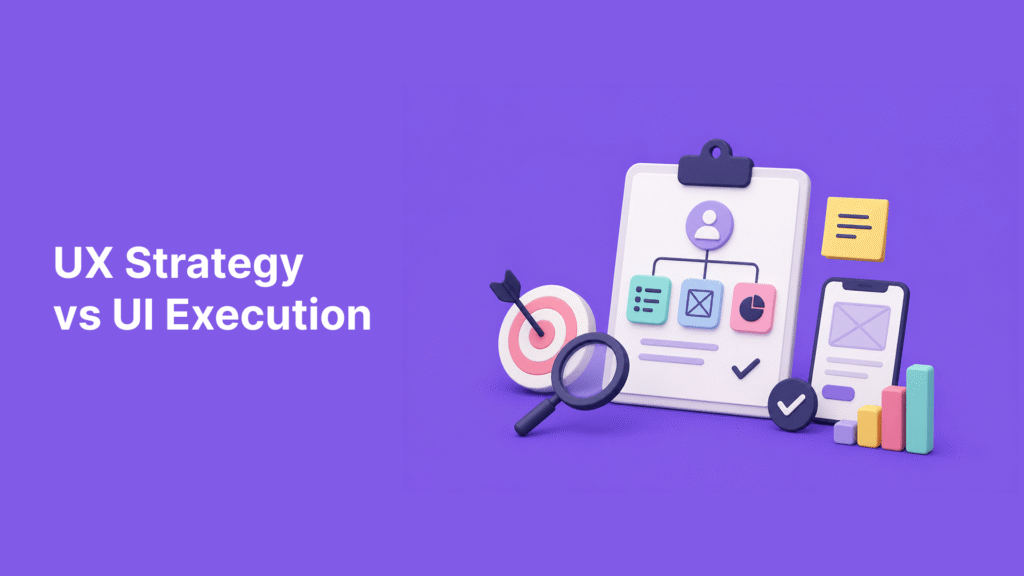
Here’s a sobering reality: 70% of online businesses fail because of poor UX strategy. The culprit isn’t bad design skills. It’s the disconnect between what a ux strategist plans and what UI teams actually execute. When your ux design strategy lives in documents while developers build features in isolation, you get beautiful interfaces that solve the wrong problems. We’ve seen companies waste resources on reactive rework while competitors pull ahead. In this guide, we’ll show you what ux strategy really means and how to bridge the gap between strategy and execution using a practical ux strategy framework.
Understanding the strategy-execution gap in product design
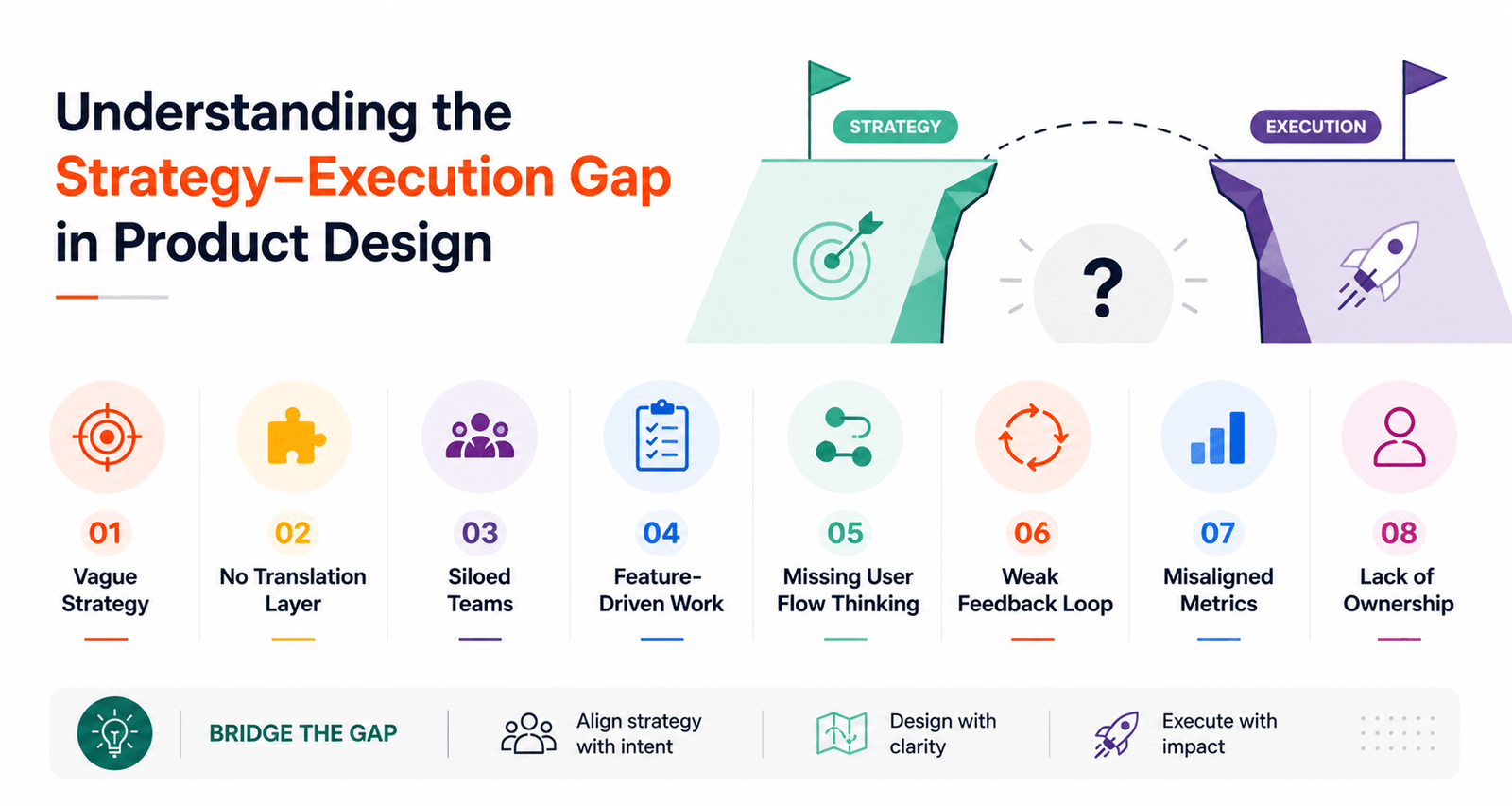
Most teams think they understand what ux strategy means until they watch their roadmaps drift from their original vision. The gap starts with role clarity. A ux strategist does fundamentally different work than UI execution teams, yet organizations treat them as interchangeable parts of the same process.
What UX strategist role actually involves?
A ux strategist synthesizes data, research findings, product direction, and business objectives into a clear vision that influences all design decisions. This isn’t about making interfaces look good. Brian Pagán describes it as using consumer insights from research and psychology to help organizations make strategy decisions while acting as a change agent.
The role requires working across business units to understand business needs, customer insights, and competitive landscape. Ronnie Battista points out that without executive ownership and investment, your chances of impact diminish greatly. A true ux strategist builds senior relationships and possesses the business acumen to navigate organizational politics.
What does this look like in practice? UX strategists define the UX vision, create strategies that translate business and user needs into engaging experiences, and produce roadmaps that guide design teams. They analyze quantitative and qualitative user research, synthesize customer data from multiple sources, and identify opportunities that connect design strategy to business results. Subsequently, they work to advance the UX practice within a company, ensuring design teams align their direction with organizational business plans.
What UI execution teams deliver?
UI execution operates in a different space entirely. Teams focus on wireframes, prototypes, visual design, and clickable interfaces that users can test on mobile devices. The work involves translating abstract strategy into tangible design artifacts.
The execution process typically moves through discovery, definition, and delivery phases. Discovery focuses on understanding the problem space through research. Definition turns insights into structure through information architecture, content requirements, and functional specifications. Delivery finalizes designs, builds components, and ships the product.
Moreover, execution teams use tools like InVision for clickable prototypes and Trello for task management with SCRUM-like processes. They research products with similar features, identify what competitors do right or wrong, and establish best practices. The output includes low fidelity wireframes, high fidelity designs, and production-ready interfaces.
Where the disconnect typically happens?
The strategy-execution gap reveals itself in the data. When product professionals rate how strongly their roadmap aligns with product strategy, the average score hits 3.6 out of 5, with 61% rating it four or higher. Ask them how clearly product outcomes connect to company goals, and the average drops to 3.5, with only 52.1% rating it four or higher.
In reality, 72.2% of respondents spend 25% or less of their time on product strategy, and only 6.1% spend more than half their time on it. When non-product teams (sales, customer success) are asked if they understand the product vision and strategy, confidence averages just 3 out of 5, with only 35.2% giving a rating of four or above.
The problem isn’t bad strategy. Resource constraints (49.2%) and shifting priorities from short-term commitments (47.5%) cause most misalignment. Execution pressure keeps overriding strategic intent. Short-term demands crowd out long-term vision.
Organizational dynamics compound the issue. Various departments have conflicting goals that don’t align with user-centered design principles. Marketing teams prioritize immediate engagement while product management focuses on monetizable features. Designers get tasked with meeting stakeholder demands that conflict with user needs. Business considerations drive decisions while user needs take a back seat.
UX designers create wireframes without considering esthetic principles while UI designers build visually pleasing interfaces that may not address user needs. This misalignment impacts the product and creates a fragmented experience where strategy documents never influence actual development. Users experience the app as a whole, yet teams treat UI and UX as separate silos, creating artificial boundaries.
Accordingly, the gap widens when strategy represents the why and what, but execution struggles with the how and when. Without a clear bridge between leadership expectations and product roadmaps, teams cannot pass over the barrier. Strategy becomes a set of good ideas trapped inside busy calendars.
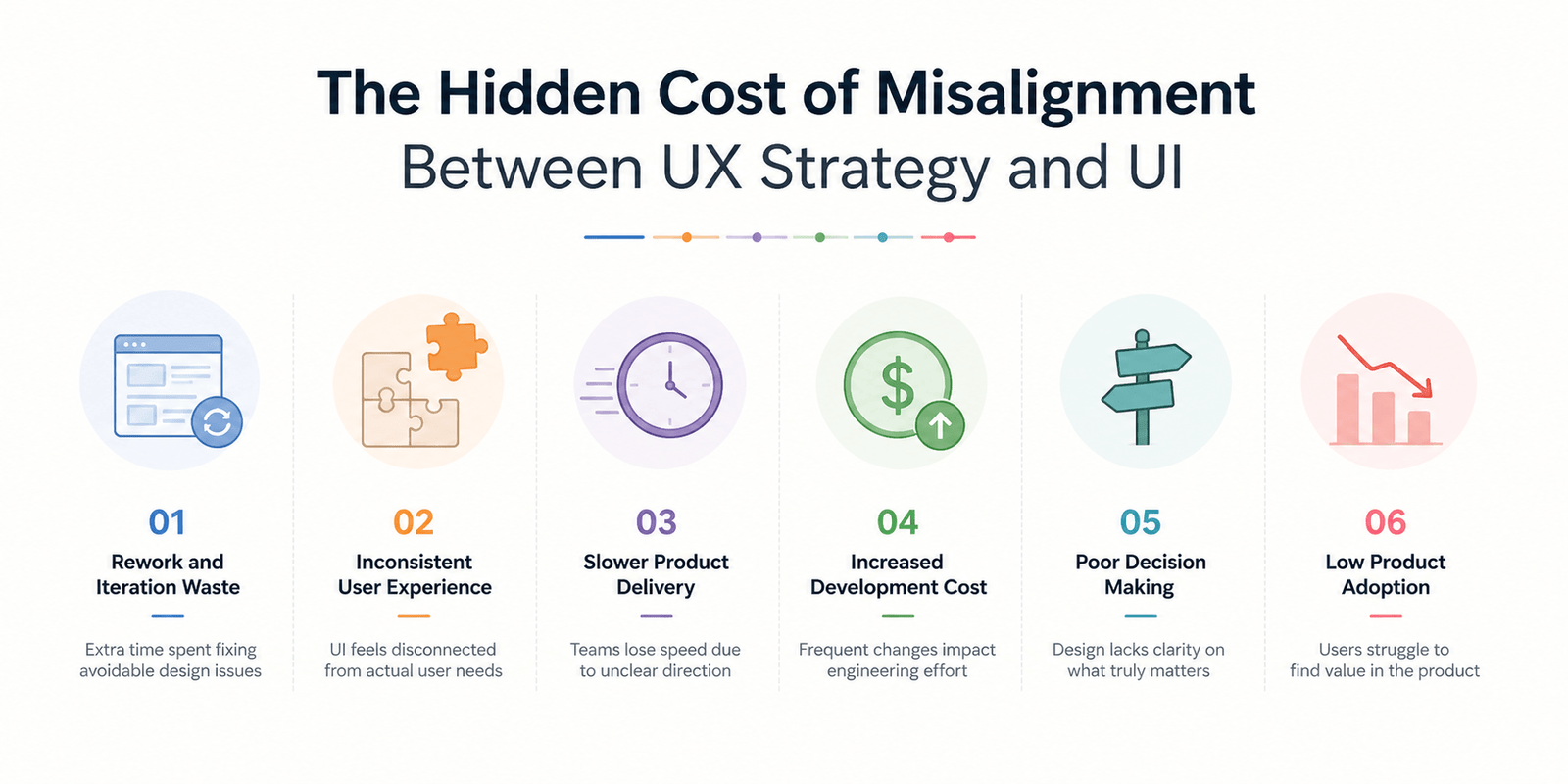
When ux strategy and UI execution drift apart, the financial damage starts accumulating before anyone notices. Teams celebrate shipping polished interfaces while adoption numbers tell a different story. The costs show up in metrics most organizations track separately, never connecting them back to misalignment.
→ Low product adoption despite good design
Beautiful interfaces built without proper ux design strategy face adoption barriers that no amount of polish can fix. Users sail through onboarding only to abandon the product within weeks because it doesn’t fit their actual workflows or solve real problems.
70% of users don’t adopt a product because they don’t understand how it works, not because the design looks bad. When teams build robust, highly technical applications without solving real user problems, usage rates stay low regardless of visual appeal. License seats go unused, feature engagement drops, and time spent in the product remains minimal.
The root cause? Building solutions based on assumptions rather than research. Tech projects fail when teams approach problems without user-centered perspectives, making incorrect assumptions about the problem, the people, and what role the tool will play. What looks like a technical failure is actually a failure to meet users where they are.
→ High churn from inconsistent experiences
Poor UX creates churn that feels invisible until revenue starts dropping. 68% of users switch to a competitor after just one poor digital experience. They don’t send angry emails or detailed feedback. They simply vanish.
Churn doesn’t happen from single incidents. Users disengage after repeated frustrations, small frictions that compound. Confusing navigation, hidden buttons, or excessive tapping create cognitive friction that lowers completion likelihood. When users can’t tell if they’re making progress, they don’t feel motivated to return.
The damage extends beyond lost customers. Cart abandonment rates hit nearly 70%, with 17% of users leaving because checkout processes are too long or complicated. Each extra form field, missing autofill, or forced account creation becomes a leak in the revenue pipeline. Poor UX puts burden on customer support as users queue up with questions about basic functions. What starts as design inconsistency ends as support overhead and damaged reputation.
→ Wasted resources on reactive rework
Here’s a number that stops most teams cold: 30 to 50 percent of all effort on software projects gets spent on rework. Not building new features. Not shipping improvements. Redoing work that was already done.
Rework hides inside phrases like “we need to revisit this” and “requirements changed”. A medium-sized engineering team can lose upward of INR 396.59 million annually to unnecessary rework. That figure only accounts for wasted hours, not delayed features or missed market windows.
Companies with differentiated UX and UI roles show 41% higher team productivity and 37% fewer design revisions compared to those with blended responsibilities. Without proper distinction, teams waste resources building unbuildable designs that create friction with engineering. Beautiful but unbuildable solutions slow development regardless of how great they look.
→ Competitive disadvantage in market
Misalignment creates market vulnerabilities that competitors exploit quickly. 78% of failed digital initiatives cite misalignment between business requirements and actual user needs as a primary factor. Companies treating design primarily as visual discipline invest 64% less in user research than those with mature ux strategy framework practices.
As a result, products ship with fundamental flaws that waste development resources and erode user trust. 94% of users lose trust in websites with poor interface design. Slow load times, confusing layouts, and messy navigation kill conversions. Every extra second of page load time drops conversions by double digits.
Organizations competing on memory of every flawless digital experience users have ever had. When ui ux strategy lacks alignment, products deliver inconsistent experiences that feel riskier than alternatives. Users choose the least risky, most familiar option. Better products fail when switching feels too risky, too hard, or too optional.
Why most companies treat UX design strategy as afterthought?
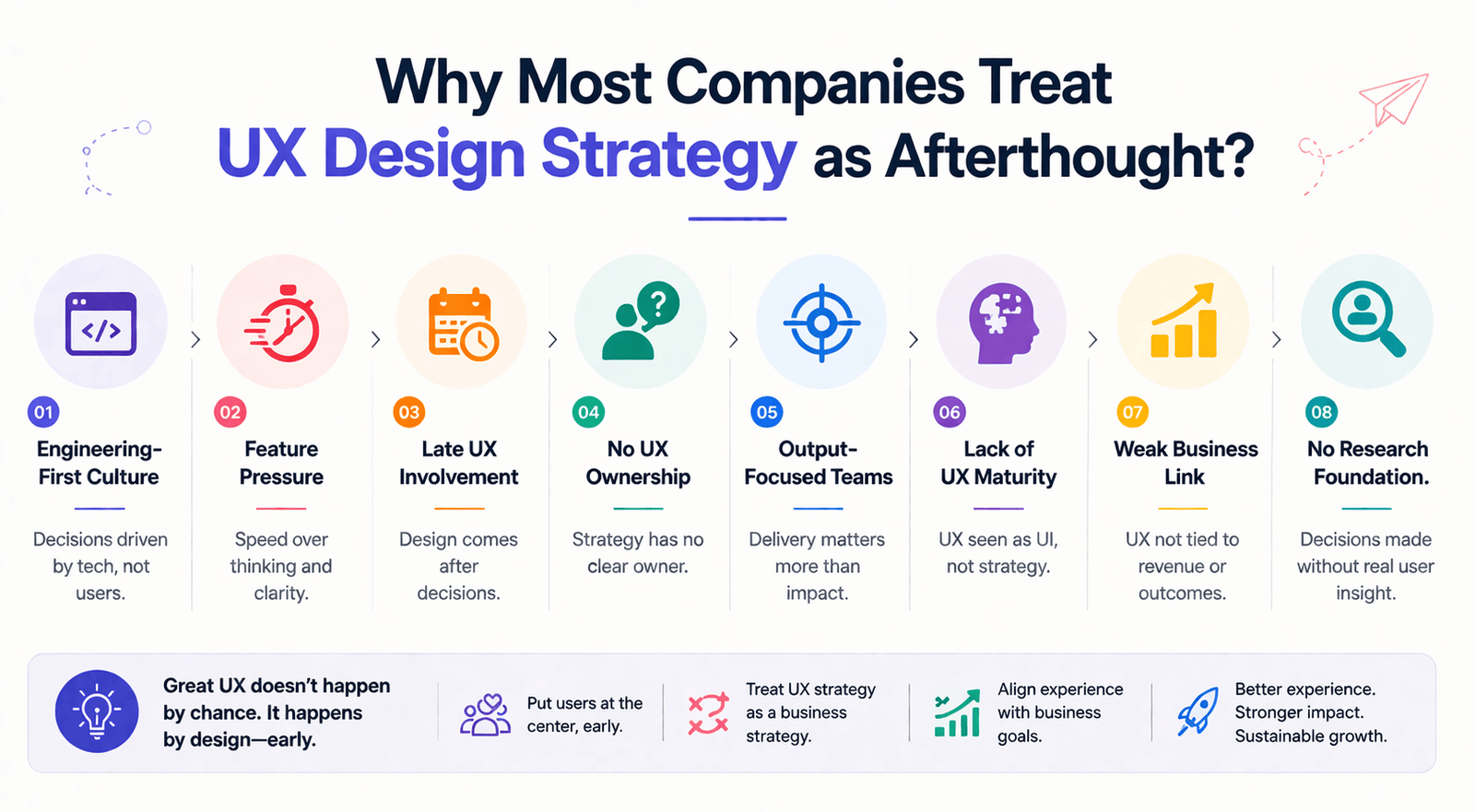
Ask most executives what UX does and you’ll hear phrases like “make things look nice” or “add some polish before launch.” This fundamental misunderstanding explains why ux design strategy gets pushed to the end of roadmaps instead of driving them.
→ UX seen as decoration, not business driver
CEOs, CTOs, and product managers often think UX means making things pretty, not solving problems. The phrase “you just need to make it pop” captures how many leaders view design work. They treat UX like makeup instead of medicine, skipping diagnosis and treatment, then panicking when products fail.
The actual gap between what businesses promise and what consumers experience gets called the brand experience gap. Identifying this requires self-awareness and willingness to examine what you’re actually delivering. Without that awareness, design decisions stem from guesswork. UX creates value on the condition that it connects what users need with what the organization must achieve. Beautiful flows and polished visuals don’t move the business forward if they solve the wrong problems.
Many non-designers underestimate the complexity of UX work, viewing it as anyone with design software can handle. This misunderstanding extends to the corporate level, where the value of UX design might not get fully recognized. Companies often have priorities that conflict with user-centered design principles, like tight deadlines, budget constraints, and corporate politics.
→ Strategy processes disconnected from development
Even in 2022, many organizations feel they know best and don’t conduct user research to understand user needs. Some teams make strategic experience decisions without any planning whatsoever. Other teams plan but fail to execute on that plan.
The pressure to deliver quickly clashes with the methodical nature of ux strategy. Understanding users deeply and refining designs through testing takes time, but timelines get dictated by market pressures and stakeholder expectations. Designers find themselves forced to skip steps in the design process due to time constraints. You’ll hear things like “let’s get it out there, let’s ship, and then we’ll test later”. The challenge? You’ve spent time and effort to build something, test it later, and it misses the mark.
Teams can talk about impact but can’t focus on it when everything feels like the house is burning. Stuff breaks in production constantly. In environments like this, thinking about outcomes becomes impossible.
→ Lack of leadership support for strategic UX
UX leaders spend daily focus defending the right for the UX function to be present when decisions get made. Defending the role’s importance becomes a constant battle that takes energy away from actual work. Going over and over the need for your role constantly becomes a waste of time. It devalues your work in senior management’s eyes.
In the software industry, many executive leaders started as developers. The vast majority do not see the value of UX. Their focus tends toward building tools they themselves would find useful. They have little understanding that user profiles often differ from themselves. Teams tell us they have trouble connecting the dots between business value and experience research.
Besides that, executives often prioritize tangibles, and UX benefits can seem intangible compared to projects yielding immediate revenue. Designers speak in terms of user flows while executives think in terms of revenue, market share, and quarterly goals. This disconnect leads to undervaluation of the ux strategy framework.
→ Feature factory mentality over experience thinking
Feature thinking focuses on the solution, not the problem. When features dominate stakeholder thoughts and dialog, value thinking sits on the sidelines. Teams forget about the value the solution brings to users and the organization. When discussing features, teams jump to technical details. If focus on the problem gets lost, value gets compromised.
The dysfunction comes when there’s no effort to understand mid to long-term impact. Sooner or later, when product management busies itself keeping everyone busy instead of establishing compelling team goals, you get very busy people. The prescriptive roadmap and planning practices around that roadmap encourage not leaving time to iterate based on feedback.
Common failure in UI UX strategy alignment
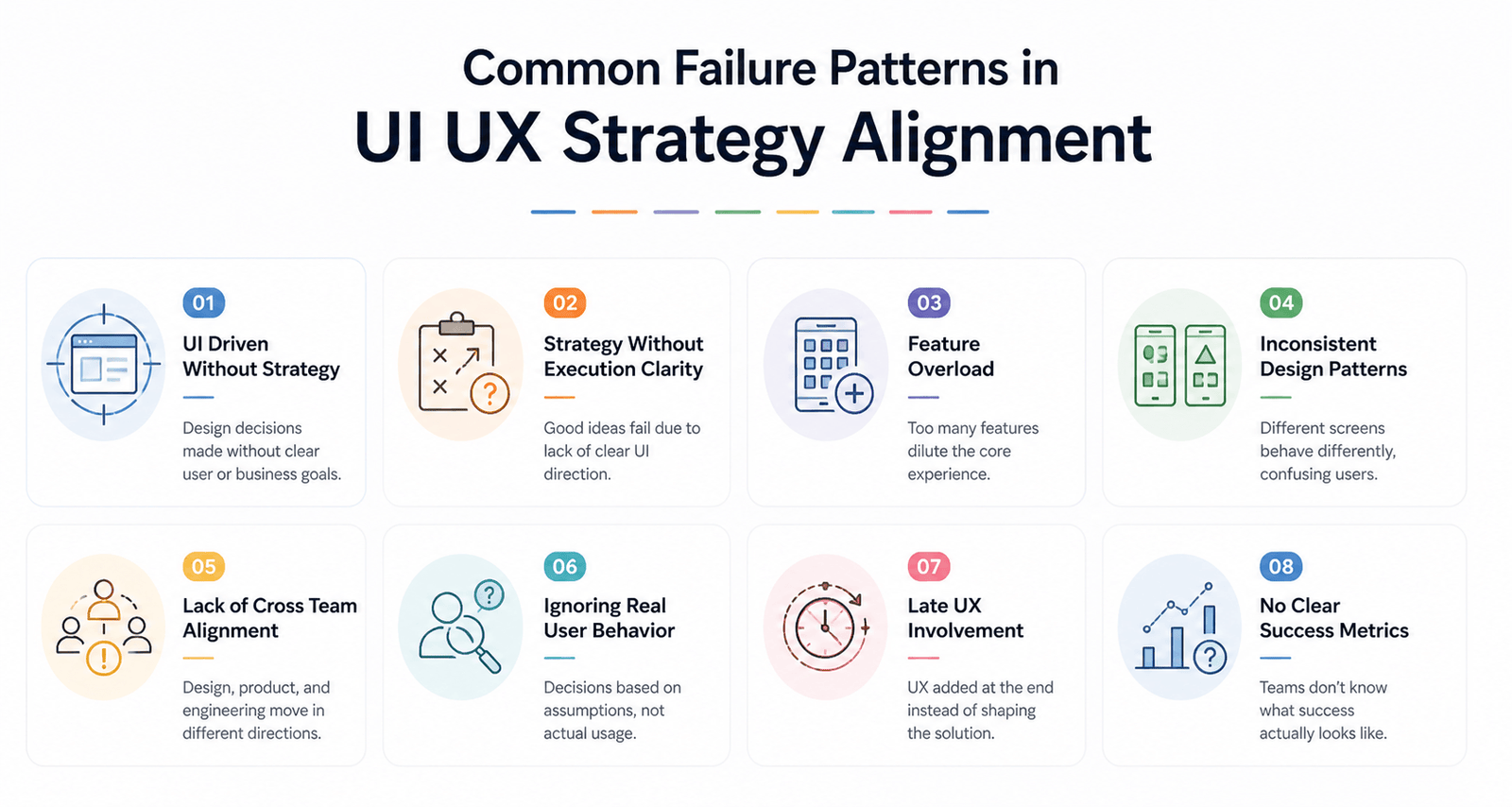
Misalignment between ux strategy and execution follows predictable patterns. Organizations make the same mistakes repeatedly, wondering why their products underperform. These failures share common DNA worth examining.
→ Beautiful interfaces that solve wrong problems
The web floods with pretty Dribbble mock-ups that solve imaginary problems. Designers create portfolios showcasing work that never shipped or addressed real user needs. One UX researcher describes it bluntly: before entering the industry, they built prototypes extensively, yet many designs looked great but served no genuine purpose.
Companies ship visually pleasing interfaces that fail to address actual user needs. The design looks polished, but users abandon it because it doesn’t fit their workflows. Beautiful but unbuildable solutions slow development regardless of how stunning they appear. Teams celebrate esthetic achievements while ignoring whether they’ve solved the right problem.
→ Strategy documents that never influence roadmaps
Strategy lives in slide decks while roadmaps follow whoever shouts loudest. The pyramid of ignorance reveals why: top management understands only 4% of an organization’s front-line problems. Executives create strategies without grasping implementation realities.
Status reports get manipulated to look green until the very moment a project fails, at which point the fallout becomes irreversible. Organizations operate with a shadow reality where manual, disparate tracking tools hide problems until correction windows close. By the time leadership sees the data, the window for corrective action has closed. Strategy exists, but it never propagates into daily work.
→ Design decisions made without user research
Teams treat user research as a validation machine rather than a discovery tool. They seek concrete proof that designs work instead of remaining open to learning they don’t. When you tell your team you want to validate a design, you signal resistance to major fixes.
In fact, most Agile teams skip user research on concepts and designs entirely. Respondents cite time constraints and lack of UX resources as top reasons. Organizations ship products without knowing their true value to customers. Decisions stem from what stakeholders think is awesome rather than what truly works.
→ Siloed teams working toward different goals
Organizational silos strangle collaboration. 83% of executives admit silos exist in their companies, and 41% of employees find cross-department collaboration challenging. Teams focus only on their own goals, reluctant to share information with other groups.
Siloed organizations face concrete consequences. They’re 2.4 times more likely to miss growth targets. Meanwhile, companies with strong cross-functional collaboration are 1.5 times more likely to report revenue growth of 10% or more. Silo-induced inefficiencies consume 350 hours per employee every year.
→ No feedback loop between strategy and execution
Teams assess strategy adoption by looking in the rear-view mirror. Lack of real-time visibility on whether you’re moving in the desired direction becomes the Achilles heel when going from strategy to execution to results. Clear, real-time progress visibility proves critical for course correction, yet it’s hard to accomplish without a common system.
Essential components of a working UX strategy framework
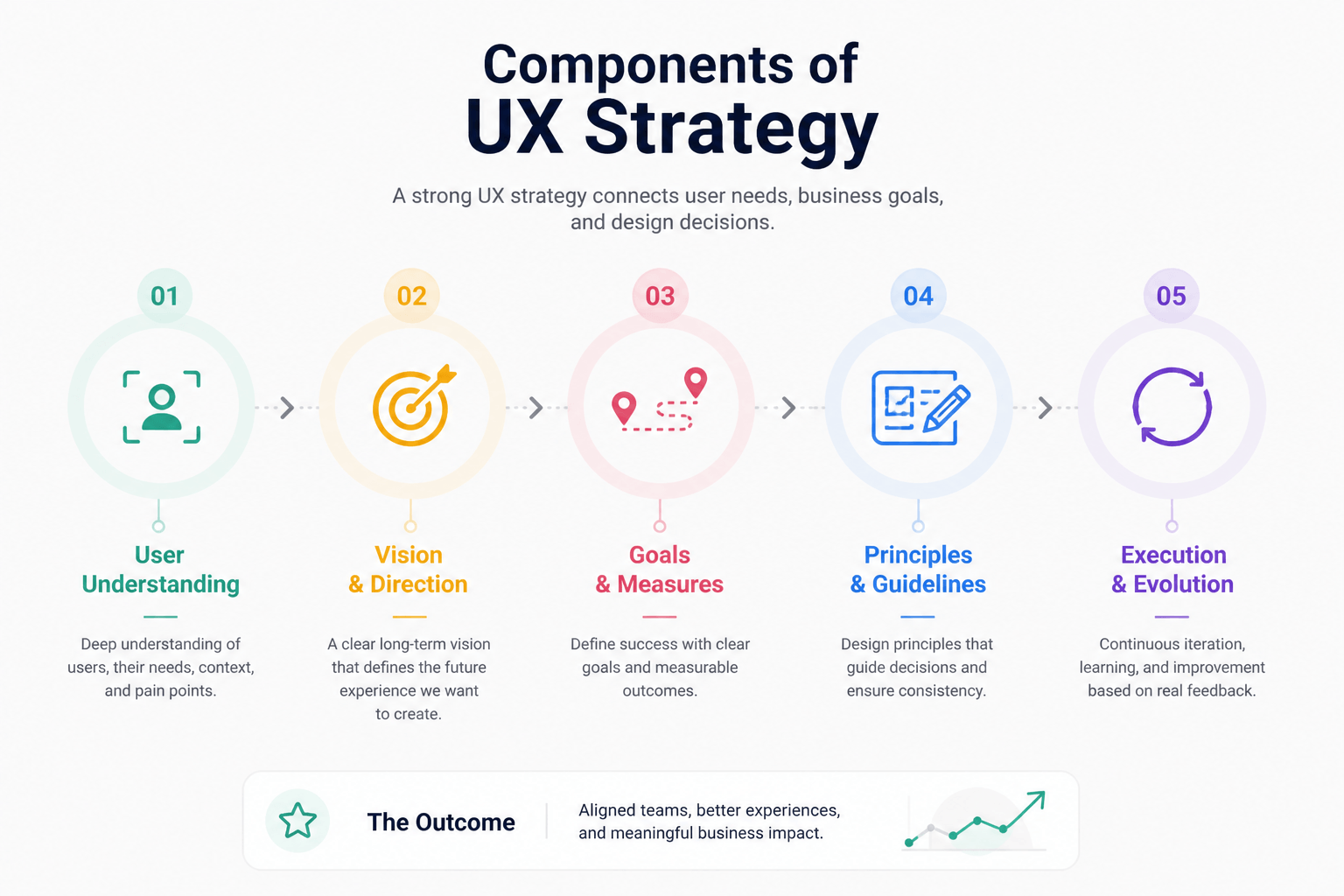
Image Source: Nielsen Norman Group
A working ux strategy framework rests on four components that teams can actually implement. Without these elements, strategy stays abstract. With them, teams gain clear direction from vision through execution.
→ Clear UX vision that guides all decisions
A UX vision provides an aspirational, future-state view of an experience people will have with a product. This shared understanding compares current user experiences against what they’ll become after delivering your best work. Strong product visions root themselves in user needs through research, analyzing pain points, and understanding behavioral patterns. The vision motivates designers, developers, and stakeholders toward a common goal while supporting business objectives like retention and conversions.
→ Strategic focus areas with business alignment
Strategic priorities must connect what users need with what the business must achieve. To this end, map how UX improvements directly contribute to business success. A business goal to increase sales pairs with a UX goal to simplify checkout flow. A goal to reduce support costs aligns with improving self-service documentation. This traceability ensures every UX decision maps back to a business driver.
→ Experience principles for consistent execution
Experience principles are inspiring values that create a shared vision across projects. They guide multiple teams toward the same goals in terms of user experience. These principles empower teams to make faster decisions, bring confidence to product strategy, and drive consistency. Equally important, they reinforce a customer experience mindset in every aspect of work.
→ Measurable success metrics
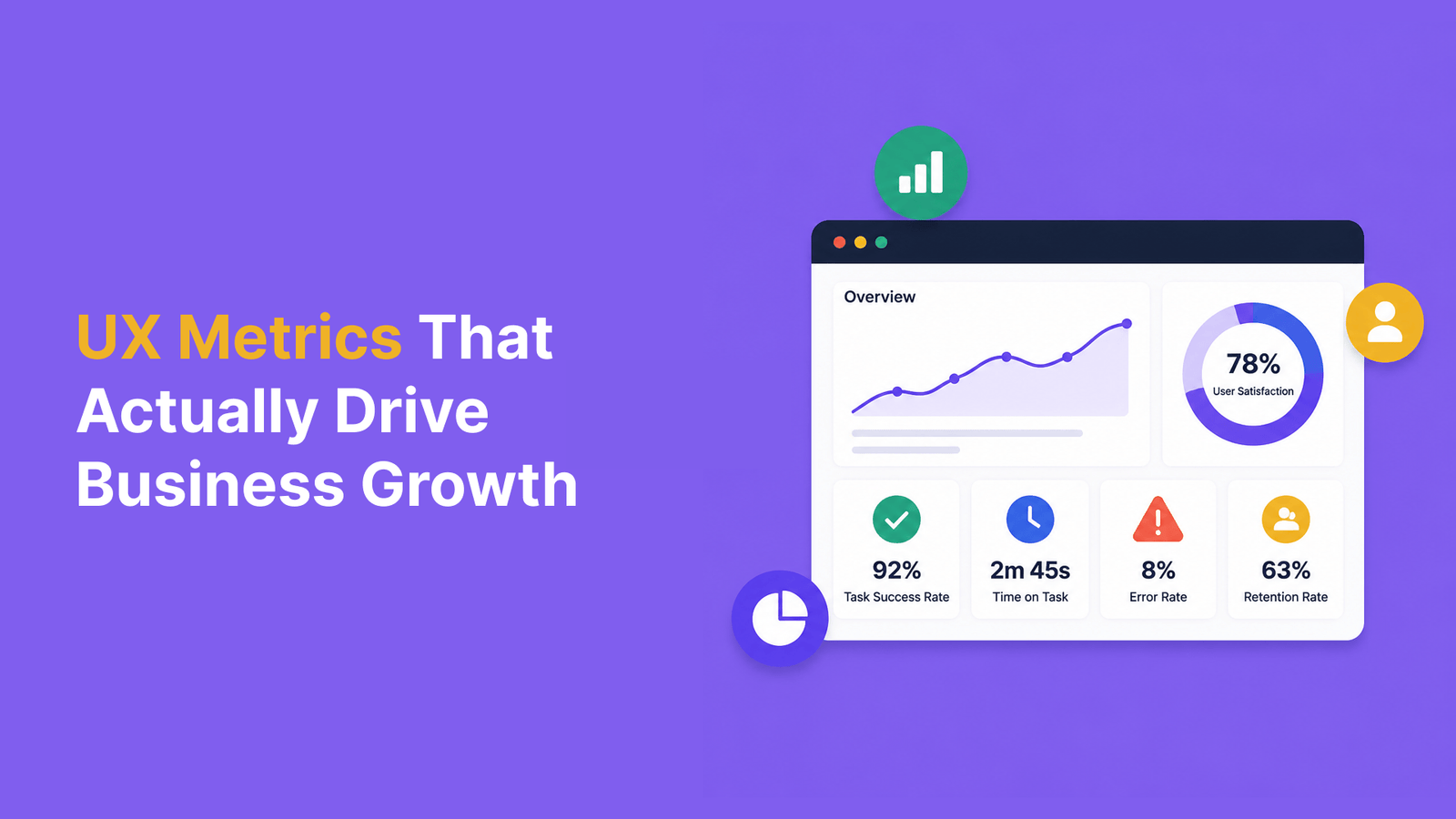
UX KPIs measure effectiveness and quality of user experience, guiding improvements. Track metrics like task success rate, user satisfaction, and adoption to identify enhancement areas. Primarily, define objectives for each KPI, choose relevant metrics for your product, and review data regularly. Metrics must align with organizational goals and show how UX contributes to priorities.
Practical steps to bridge strategy and execution
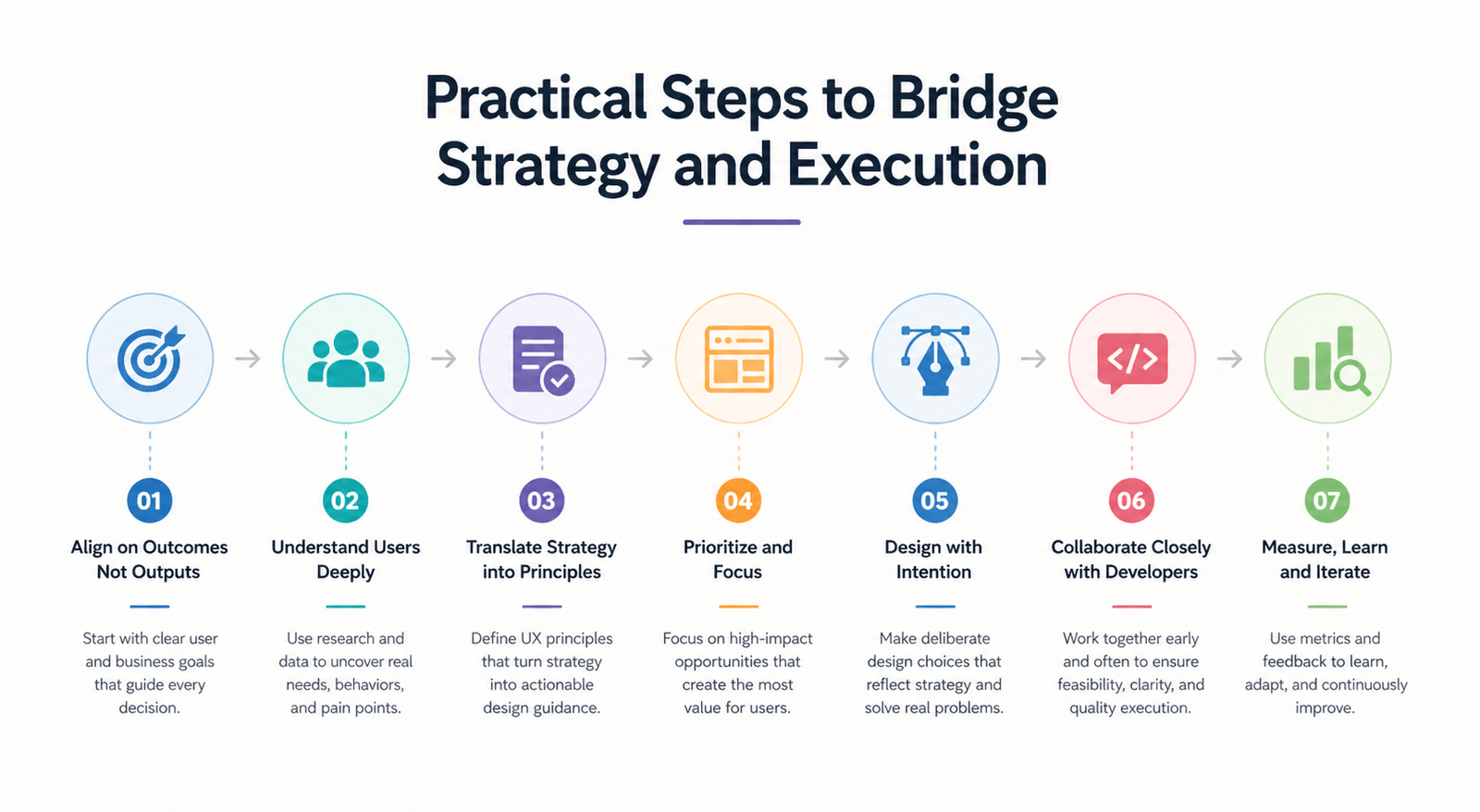
Bridging the gap requires deliberate action, not more documentation. Here’s how to connect ux strategy with execution teams actually follow.
→ Diagnose current experience and identify gaps
First, assess where you stand. Conduct audits to identify user pain points and evaluate digital products with structured assessments that uncover usability issues. Benchmark experiences against competitors and best practices in your industry. Visualize user behavior through tools and data to see where users struggle, abandon tasks, or spend excessive time. Gather diverse feedback from customer support, account managers, and surveys to understand pain points from multiple perspectives.
→ Define strategic priorities with execution teams
Work with stakeholders and individual contributors to identify, diagnose, prioritize, and address work outlined in the plan. Prioritize quick wins with revenue-growing potential that have real business and user impact. Goals, along with metrics and KPIs, should directly connect UX improvements with business goals.
→ Translate strategy into actionable design themes
Create user stories and content based on decisions anchored to earlier agreements and validated by real customer conversations. Document and get written confirmation of these agreements to move forward with confidence. The plan helps prioritize activities and address uncertainties.
→ Create feedback mechanisms to validate direction
Good products result from good feedback loops where product teams continually validate assumptions with real users and iterate. Continuous validation helps identify if the product is useful, provides a positive experience, and effectively solves the intended problem. Gather feedback through usability testing, surveys, and interviews at any point in the development process.
→ Review and iterate based on real outcomes
Iterative design improvements involve designing, testing, analyzing feedback, and refining the platform. Gather feedback, prioritize issues based on impact and effort, implement changes, test improvements, analyze results, and repeat the cycle. Treat design as a dynamic process that evolves with user needs.
Conclusion
The gap between UX strategy and UI execution costs businesses real money through low adoption, high churn, and endless rework. Consequently, treating UX as decoration instead of a business driver leads to beautiful products that solve the wrong problems.
Start by diagnosing your current gaps, then work with your execution teams to define priorities together. Build feedback loops that validate direction using real user data, not assumptions.
Remember these key actions: → Connect UX improvements directly to business goals → Create experience principles that guide consistent execution → Measure outcomes that matter to both users and revenue
Strategy without execution stays trapped in documents. Bridge that gap now, and you’ll see results within weeks.
Key Takeaways
The disconnect between UX strategy and UI execution is costing businesses millions in wasted resources and lost opportunities. Here’s what you need to know to bridge this critical gap:
• 70% of online businesses fail due to poor UX strategy alignment – Beautiful interfaces that solve wrong problems lead to low adoption despite good visual design
• Strategy-execution misalignment wastes 30-50% of development effort on rework – Teams spend more time fixing than building when strategy doesn’t guide execution
• Most companies treat UX as decoration, not a business driver – This fundamental misunderstanding pushes strategic thinking to roadmap afterthoughts instead of leading decisions
• Create feedback loops between strategy and execution teams – Work together to define priorities, translate strategy into actionable themes, and validate direction with real user data
• Connect UX improvements directly to measurable business goals – Map how user experience enhancements contribute to revenue, retention, and competitive advantage
The solution isn’t more documentation—it’s building bridges between strategic vision and daily execution through shared priorities, clear principles, and continuous validation with real users.
FAQs
Q1. What’s the main difference between UX strategy and product strategy?
Product strategy balances user needs, market demand, and business goals from a business-led perspective. UX strategy, on the other hand, is predominantly user-led, focusing specifically on creating experiences that meet user needs and expectations while supporting business objectives.
Q2. How do discovery, definition, and delivery phases differ in UX work?
Discovery focuses on understanding the problem space through research and exploring why problems exist. Definition turns insights into structure by making decisions about information architecture, content requirements, and functional specifications. Delivery finalizes designs, builds components, and ships the product while validating decisions against real-world constraints.
Q3. Does information architecture belong in the strategy or execution phase?
Information architecture evolves across both phases rather than sitting cleanly in one. It starts during discovery in an exploratory way, becomes explicit and testable during definition, and gets refined during delivery as designs are implemented and validated. It’s not a strict handoff but an evolving process.
Q4. What should be delivered at the end of a discovery and definition project?
The core delivery is a defined UX design strategy that includes clear problem framing and goals, agreed design principles, information architecture and key user flows, supporting artifacts like wireframes, and recommended testing methods with success metrics so teams can build and validate with confidence.
Q5. Why do wireframes appear in both strategy and execution phases?
Wireframes serve different purposes depending on the phase. During the definition phase, they help teams think, align, and pressure-test strategy decisions. During delivery, they become production-ready designs that guide implementation. The shift isn’t about the artifact itself but about the intent behind creating it.